
Facts About Eintopf
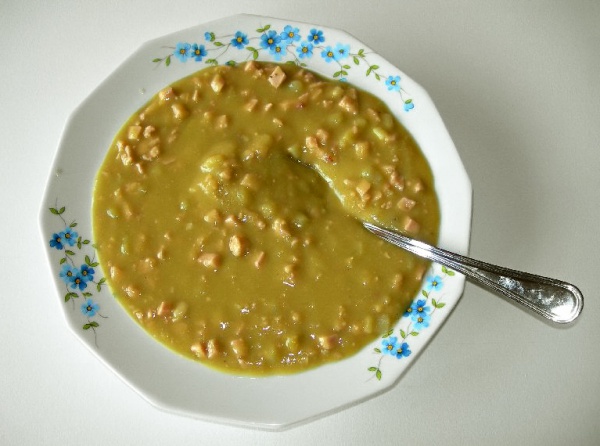
Eintopf, a beloved German stew, epitomizes simplicity and flavor. Unlike dishes bound by rigid recipes, Eintopf is more of a culinary concept where various ingredients are cooked together in a single pot. Each region in Germany adds its own unique twist, introducing distinct ingredients and flavors.
At its core, Eintopf typically features a hearty broth, a variety of vegetables (often including greens), a starchy element like potatoes or pulses, and sometimes meat or sausage. The true beauty of Eintopf lies in its versatility—you can utilize whatever ingredients are readily available.
To prepare Eintopf, you start with a base such as beef stock, chicken broth, or vegetable stock, and gradually incorporate your chosen ingredients. The aim is to cook everything until tender but not mushy, resulting in a stew that offers a range of textures, unlike the more uniform consistency of English-style stews or Japanese nabemono. Common ingredients include pork, beef, chicken, carrots, peas, beans, and a variety of kitchen herbs to enhance the flavor.
Historically, Eintopf even played a role in politics. In 1933, the Nazi party introduced "Eintopfsonntag" (One-Pot Sunday), mandating the preparation of Eintopf on specific days as part of a national campaign.
There are many delightful examples of Eintopf, such as Gaisburger Marsch, German pea soup (Erbsensuppe), lentil stew (Linseneintopf), rutabaga stew (Steckrübeneintopf), and more uniquely named dishes like Moppelkotze and Pichelsteiner. Each of these dishes showcases the rich diversity of Eintopf recipes across Germany, cementing its status as a staple of German cuisine.
 Luxembourg