

Facts About Blue-headed parrot
The blue-headed parrot, also known as the blue-headed pionus, is a captivating medium-sized parrot native to the lush tropical and subtropical regions of South America and the southern parts of Central America. Sporting a mostly green body, these birds are easily recognized by their striking blue head and neck, red undertail coverts, and their approximately 27 cm (about 10.6 inches) length.
These parrots thrive in forests, semi-open areas, and even cultivated lands, showing a preference for humid or semi-humid environments. When it comes to nesting, they choose tree cavities to lay their three to five white eggs. Their diet mainly consists of fruit and seeds, with occasional grains.
One of the most notable traits of the blue-headed parrot is its noisy, high-pitched calls. They also exhibit communal roosting behavior, often gathering in large groups in palm trees and other tall vegetation. Despite their vocal nature, they are quite popular as pets due to their generally quiet demeanor and affectionate nature, though they aren't particularly known for their talking abilities.
Young blue-headed parrots are less colorful, with reduced blue on their heads, and it can take up to two years for them to develop their full adult plumage. There are three subspecies of the blue-headed parrot, each with unique characteristics such as variations in plumage and bill color.
These parrots can be found across a wide range, extending from the Amazon region in South America to parts of Central America, including Brazil, Costa Rica, and Panama. However, they tend to avoid certain areas, such as the northern Andes cordillera spine.
Their diet is primarily composed of fruits and seeds. For breeding, they nest in tree cavities and lay clutches of three to five white eggs. The female incubates the eggs for about 26 days, and the chicks typically fledge around 70 days after hatching.
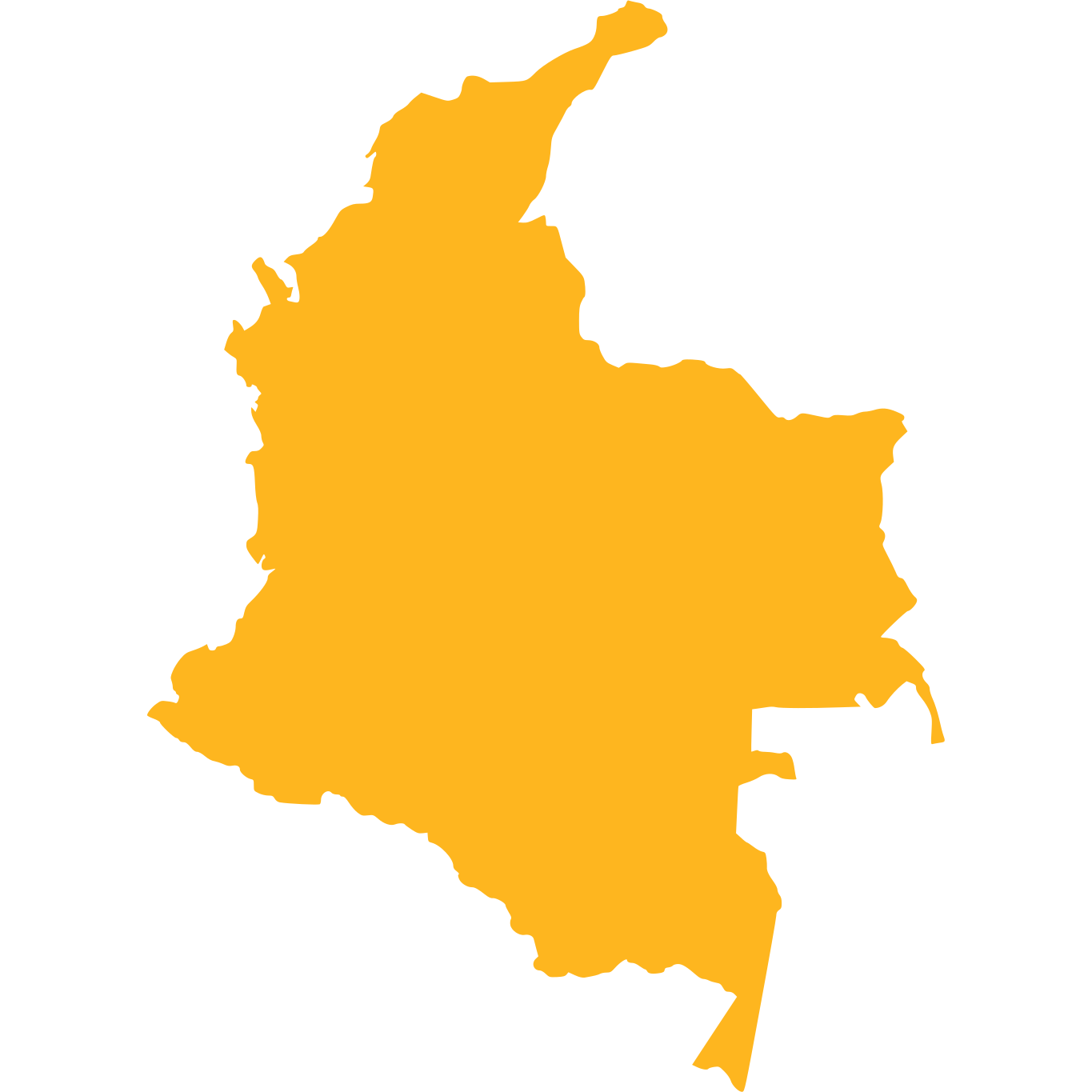 Colombia