Schloss Geiersberg, Seßlach
#1 among attractions in Seßlach


Facts and practical information
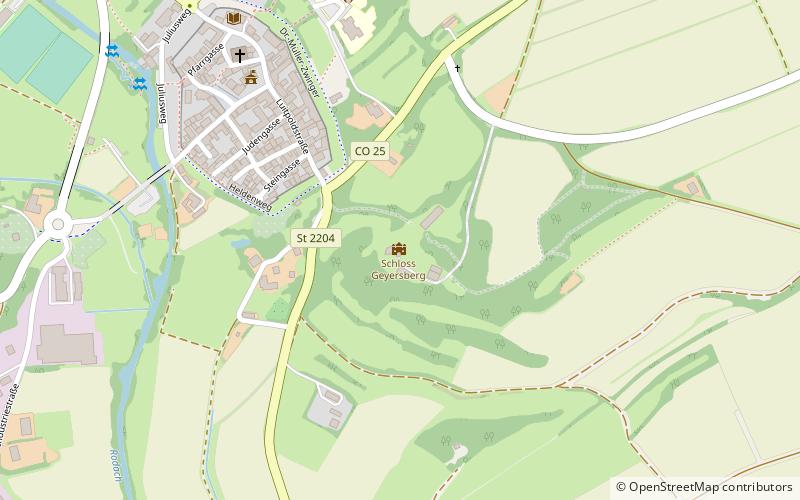
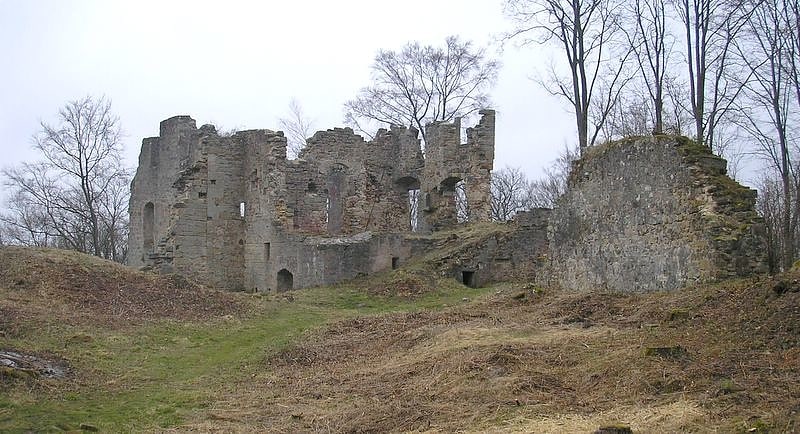
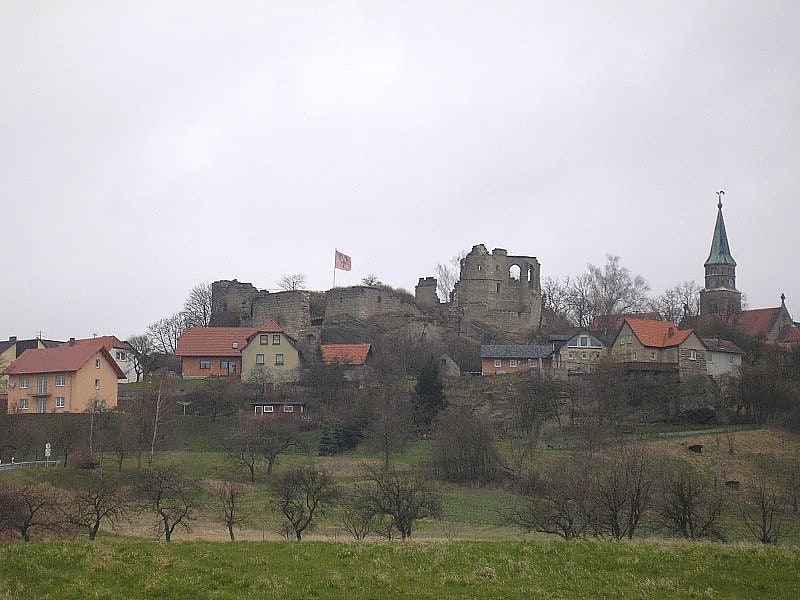
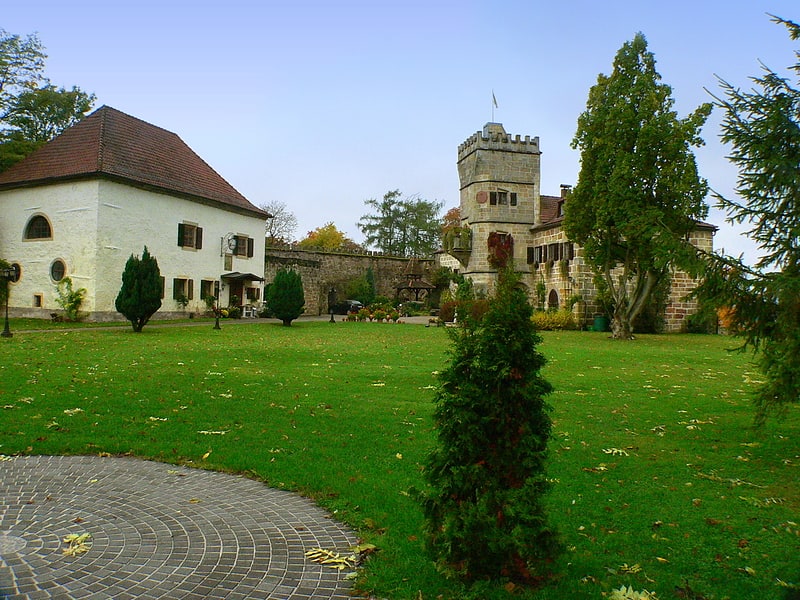
Geiersberg Castle stands southeast of the town of Seßlach in the district of Coburg in Upper Franconia, on a ridge of the Bürgerwald forest that is advanced toward the Rodachgrund. It is also an officially named part of the municipality. The estate is also called Schloß Geyersberg.
Seßlach Germany
Seßlach plan & book
Unleash the traveler in you — discover the cheapest flight deals, find the perfect hotel or hostel nearby, and search for the best car rental prices. Travel at your own pace to discover new places and enjoy your journey.
Schloss Geiersberg – popular in the area (distance from the attraction)
Nearby attractions include: Rauheneck Castle, Schloss Ehrenburg, Morizkirche, Rotenhan Castle.
7.3 miSW
Forts and castlesRauheneck Castle
187 min walk • Nestled in the lush, verdant hills of Baden-Württemberg, Germany, the ruins of Rauheneck Castle offer a glimpse into the medieval past. This historical fortress, now in a state of picturesque decay, once stood as a formidable stronghold in the region.
7.3 miNE
Ornate ducal palace and art gallerySchloss Ehrenburg, Coburg
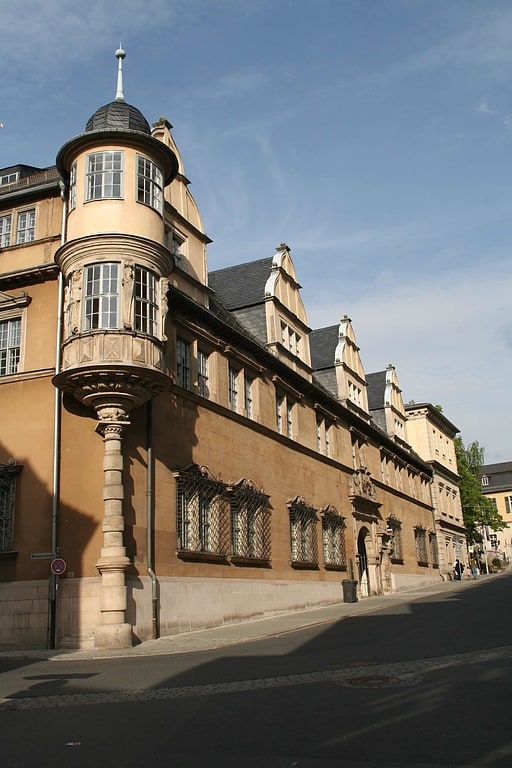
187 min walk • Ehrenburg Palace is a palace in Coburg, Franconia, Germany. It served as the main Coburg residence for the ruling princes from the 1540s until 1918. The palace's exterior today mostly reflects Gothic Revival style.
7.3 miNE
Sacred and religious sites, Church, Gothic architectureMorizkirche, Coburg
186 min walk • Morizkirche is a Protestant church dedicated to Saint Maurice in Coburg, Bavaria, Germany, and is the town's oldest church. Its earliest remaining structures date back to the 14th century, which superseded a church from the 12th century.
5.4 miSW
Forts and castlesRotenhan Castle
139 min walk • Perched on a craggy hilltop in the Franconian region of Bavaria, Germany, Rotenhan Castle, also known as Burg Rotenhan, is a historical fortress whose origins date back to the 12th century. This medieval structure is a testament to the architectural prowess and the...
7.5 miNE
Sacred and religious sites, ChurchSt. Augustin, Coburg
191 min walk • St. Augustine's Church is a parish church of the Roman Catholic Archdiocese of Bamberg located in the Bavarian town of Coburg, Germany. It was built between 1856 and 1860. Originally designed in the Gothic Revival style, the church was remodelled in 1960 due to a liturgical reform.
7 miNE
ParkRose Garden, Coburg
180 min walk • The Rose Garden is a park in Coburg, Bavaria, Germany, located between the Ketschentor and the Angerturnhalle.
4.2 miSW
Forts and castlesBurg Lichtenstein
108 min walk • Lichtenstein Castle is a high to late medieval hill castle, 380 m above sea level, about six kilometres north of Ebern in the Lower Franconian county of Haßberge in Bavaria. It is located in the municipality of Pfarrweisach.
7.4 miNE
Concerts and shows, TheaterLandestheater Coburg, Coburg
189 min walk • Landestheater Coburg is a medium-sized three-division theatre in Coburg, Bavaria, Germany. Located on Schlossplatz, a central square, the Neoclassical building has 550 seats. In 2008, the theatre employed 250 permanent staff and 100 part-time employees.
7.3 miNE
LibraryLandesbibliothek, Coburg
187 min walk • The Landesbibliothek Coburg is a regional state library under the administration of the Free State of Bavaria. It has its seat in the Ehrenburg Palace in Coburg and brings together the historical book collections of the dukes reigning in Coburg and their relatives.
3.4 miW
Forts and castlesAlte Burg
88 min walk • The Alte Burg is an early medieval ringwork between Altenstein and Lichtenstein in the borough of Market Maroldsweisach in the Lower Franconian county of Haßberge in the province of Lower Franconia in Bavaria, Germany.
5 miW
Forts and castlesAltenstein Castle
129 min walk • Altenstein Castle is a ruined castle in Altenstein in the district of Haßberge in Lower Franconia, Germany. The family seat of the lords of Stein zu Altenstein, which died out in the 19th century, is located 40 kilometres north of the city of Bamberg and, since the end of the 20th century, has been managed by the district of Haßberge.